
Expatriate adoption
About expatriate adoption
There are important differences between intercountry adoption and expatriate adoption.
If you are an Australian citizen living overseas, you may be thinking about adopting a child in the country where you live. This is sometimes called an expatriate adoption.
Expatriate adoption is not part of Australia's intercountry adoption program
Australian adoption authorities do not assess, approve or support expatriate adoptions. Legal, child protection and ethical safeguards may be different from those available through Australia's intercountry adoption arrangements.
The Australian Government’s involvement is limited to deciding whether the child meets immigration requirements for an adoption visa(Opens in a new tab/window).
How expatriate adoption is different from intercountry adoption
Expatriate adoption is when an Australian citizen or permanent resident lives in another country and:
- they adopt a child under that country's adoption laws
- the adoption takes place outside Australia's intercountry adoption program.
Australia's intercountry adoption programs operate through formal arrangements with participating countries. These programs include:
- assessing and approving applicants
- child protection safeguards
- legal and ethical checks
- support before and after adoption
- processes that support recognition in Australia.
Australia’s intercountry adoption requirements and safeguards are in place to protect the best interests of the child. Expatriate adoptions should not be seen as a way to avoid them.
Watch the video, read the fact sheet and explore the resources on this page to make an informed decision.
Video explainer
This short, animated video explains:
- what expatriate adoption is
- how it differs from Australia's intercountry adoption programs
- common risks and challenges
- where to seek advice and support.
The video is also available in Hindi, Tagalog and Thai translations.
Understanding the risks
Every adoption should be safe, ethical and in the best interests of the child.
In some countries, adoption systems may operate differently from Australian processes. This can create risks for children and families.
Understanding these risks before you begin can help you make informed decisions and avoid unexpected challenges later.
Legal risks
An adoption completed overseas may not automatically be recognised in Australia.
You may experience issues with:
- Australian visa requirements
- applying for citizenship
- travel documentation
- getting your rights as a parent recognised
- state and territory legal requirements.
Different countries have different adoption laws. A process that is legal overseas may not meet Australian requirements.
Supporting letters
Some countries ask for a document called a supporting letter, also known as a letter of no objection or no objection certificate. This document confirms that a country’s central authority does not object to the adoption proceeding.
Some countries ask for a supporting letter from Australian authorities. Australian authorities do not issue these for expatriate adoptions.
This may affect whether an expatriate adoption can be legally finalised or whether you can return to Australia with your adopted child.
Child protection risks
In some countries, record-keeping and child protection systems may be limited.
This can make it difficult to confirm:
- the child's identity
- their family history
- whether all necessary consents were provided
- whether the child was legally available for adoption.
These issues can affect the child's understanding of their identity later in life.
Ethical risks
In some parts of the world, safeguards against child trafficking, child selling or improper financial payments may be weaker.
This may create situations where:
- families are pressured to give up children
- children are separated from relatives who could care for them
- information about a child is incomplete or inaccurate.
Prospective adoptive parents should understand how children enter adoption systems and whether appropriate safeguards are in place.
Long-term risks for families
Some challenges may not appear until years after the adoption.
Families may experience:
- difficulties obtaining records
- questions about citizenship or legal status
- challenges accessing support services
- limited information about the child's background
- emotional impacts related to identity and belonging.
Planning ahead can help families prepare for these possible challenges.
Downloadable resources
Explore our fact sheet and stakeholder communication kit to better understand expatriate adoption. These resources provide clear information, key messages and practical guidance. They will help individuals, families and community organisations make informed decisions and share accurate information with others.
These resources are available in:
- English
- Hindi
- Thai
- Tagalog.
Fact sheet
A summary of key information about expatriate adoption and associated risks.
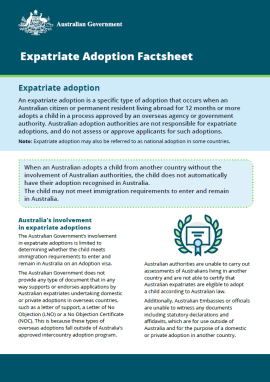
Expatriate adoption factsheet
Access thisStakeholder Communication Kit
This kit is designed for:
- community organisations
- settlement services
- cultural community groups
- family support services
- government agencies
- adoption support organisations.
The kit includes:
- key messages
- newsletter content
- website text
- ready-to-use social media posts with graphics and short videos.
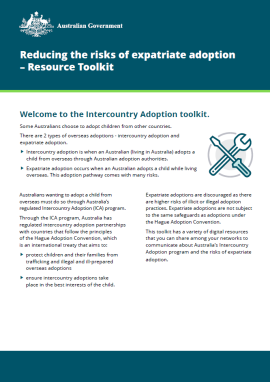
Intercountry adoption stakeholder toolkit
Access thisMore information
- If you are interested in applying to adopt a child from overseas, contact your Australian state or territory central authority. They are listed in the intercountry adoption contacts
- Visit the Smartraveller website to learn about going overseas to adopt a child(Opens in a new tab/window)
- Visit the Department of Home Affairs website to learn about children adopted outside Australia by an Australian citizen(Opens in a new tab/window).