Working with ministerial offices
Departmental Liaison Officers
A Departmental Liaison Officer (DLO) is a public servant who is temporarily placed in a minister's office (MO). They act as a conduit between their department and the MO.
Information on the allocation of our DLOs to portfolio ministers is provided in the table below. This information is updated twice a year.
Correct as at 30 June 2026.
| Minister | DLO allocation and classification |
|---|---|
| The Hon Tanya Plibersek MP | Two (2): 1x EL2, 1x EL1 |
| The Hon Ged Kearney MP | One (1): APS6 |
Ministerial briefs and correspondence
We routinely provide briefings to our ministers and assistant ministers.
The table below shows the number of briefings provided to ministers or assistant ministers.
| 2025–26 (to 30/06/26) | |
|---|---|
| Total sent to MO /AMO | 1,449 |
The table below shows the number of correspondence sent for minister or assistant minister signature.
| 2025–26 (to 30/06/26) | |
|---|---|
| Total sent to MO/AMO | 1,116 |
The Domestic, Family and Sexual Violence Commission provided 22 briefs to portfolio ministers and assistant ministers between 1 July 2025 and 30 June 2026.
The National Commission for Aboriginal and Torres Strait Islander Children and Young People provided 7 briefs to portfolio ministers and assistant ministers between 1 July 2025 and 30 June 2026.
Interdepartmental committees, taskforces, reviews and entities
Interdepartmental committees
An Interdepartmental Committee (IDC) is a common governance body for cross-agency taskforces. An IDC is where officials from representative agencies may discuss work and provide input on deliverables.
The Department of Social Services and its portfolio agencies are regularly involved in the work of IDCs. We participate in IDCs that are led by the following departments/agencies:
- Department of the Prime Minister and Cabinet
- Department of Finance
- The Treasury
- Department of Health, Disability and Ageing
- Department of Agriculture, Fisheries and Forestry
- National Indigenous Australians Agency
- Attorney General’s Department
- Department of Education
- Department of Foreign Affairs and Trade
- Australian Institute of Health and Welfare
- Department of Infrastructure, Transport, Regional Development, Communications, Sport and the Arts
- Australian Taxation Office
- Department of Employment and Workplace Relations
- Department of Home Affairs
- National Disability Insurance Agency
- Australian Bureau of Statistics
- Digital Transformation Agency
- Department of Industry, Science and Resources
- Services Australia
Some examples of IDC topics include:
- Australian Public Service reforms
- Closing the Gap
- health and wellbeing
- aged care
- people with disability
- gender equality
- education
- employment and early childhood
- children and young people
- seniors
- families
- communities
- income management
- housing
- migration
- regional development
- international relations
- finance
- privacy
- integrity
- regulation
- economic
- productivity
- resilience and emergency management
- expatriate adoption
- grants management
- artificial intelligence.
By their nature, IDCs can be established and conclude their work rapidly as the need arises.
Taskforces
Taskforces are a method of doing business across the Australian Public Service (APS), including in the department. We regularly establish taskforces to meet emerging or high-profile government priorities. Some are short term (3 to 6 months), some longer (one to 3 years). All taskforces require dedicated focus, varying timescales, set-up and delivery resourcing and effort. This is from many parts of the department and more broadly across the APS.
We, and our portfolio agencies, are regularly involved in the work of a range of taskforces.
Reviews
We are also involved in reviews. Our current reviews, as at 30 June 2026, are:
- Review of Carer Payments and Supports
- Review of jurisdictions’ implementation of the Aboriginal and Torres Strait Islander Child Placement Principle
- Evaluation of the Community-Led Sexual Violence Prevention Pilot (also known as the Partners in Prevention of Sexual Violence Project) model for evidence gathering
- Evaluation of the Improving Multidisciplinary Response Program
- Evaluation of the Child and Family Intensive Support Services (CaFIS)
- Independent evaluation of the Home Interaction Program for Parents and Youngsters (HIPPY)
- Evaluation of the National Consumer Protection Framework for online wagering (NCPF)
- Be Connected Program Evaluation 2025-2027
- Evaluation of the Investment Strategy – Innovation Fund Grant Opportunity
- Evaluation of the Strong and Resilient Communities (SARC) Activity
- Family, Domestic and Sexual Violence Workforce Survey
- Australia’s National Research Organisation for Women’s Safety (ANROWS)
- National Plan to End Violence against Women and Children 2022–2032 mid-term review
- Review of Keeping Women Safe In Their Homes.
Our reviews, completed and released between 1 March 2026 and 30 June 2026, are:
- National Model of Care – completed in June 2026
- 1800RESPECT Digital Assets Refresh Project Discovery Phase – completed in May 2026
- Joint Evaluation of Family and Relationship Services (FaRS) and Specialised Family Violence Services (SFVS) – completed in April 2026
- Evaluation of the Paid Parental Leave (PPL) Scheme – Phase 2 – completed in March 2026.
Learn more about our reviews.
Entities
From 1 January 2026 up to 30 June 2026, the following new entities including advisory boards and agencies have been wound up, amalgamated, ceased, disbanded, or reconstituted as new bodies:
- 1800RESPECT Stakeholder Panel – ceased 30 June 2026.
From 1 January 2026 up to 30 June 2026, the following new entities including advisory boards and agencies were created:
- National Commission for Aboriginal and Torres Strait Islander Children and Young People(Opens in a new tab/window) (entity) – commenced operations as an executive agency on 13 January 2025. The National Commission transitioned from an executive agency to a permanent, independent statutory agency from 1 July 2026.
Committees, groups and panels
Our committees, panels and groups provide ways for people and organisations to help us develop policies and provide advice on specific issues.
- Aboriginal and Torres Strait Islander Leadership Group
This group shares decisions with all Australian governments in implementing Safe and Supported: the National Framework for Protecting Australia’s Children 2021-2031. - Child Support Stakeholder Consultation Group
This is an advisory group to Government on the Child Support Scheme. It helps achieve better outcomes for separated and separating families. - Commonwealth National Plan Implementation Committee
This committee ensures senior executive leadership and accountability across key Commonwealth agencies responsible for the effective delivery and implementation of the National Plan. - Community Services Advisory Group
This is a key community sector stakeholder engagement group on issues relating to our policies and programs. - Economic Inclusion Advisory Committee
The committee provides independent advice to Government before each Budget on economic inclusion and tackling disadvantage. - Intercountry Adoption Authorities
We perform the duties of the Australian Central Authority under the Hague Convention. There is also a central authority for each state and territory. Responsibility for intercountry adoption is shared across these central authorities. - National Leadership Group
The group is a cross-sector advisory body that supports the implementation of the Stronger Places, Stronger People initiative. - Parents and Carers Reference Group
This group provides parents and carers with the opportunity to share their experience and knowledge. This helps inform policy, programs and services for families. - Partnership Priorities Committee
The committee helps steer better policy and delivery outcomes by embedding partnerships and co design. - Chief Counsel Social Security and Family Assistance Legal Forum
The forum provides a valuable mechanism for senior-level engagement across the portfolio. It ensures alignment on significant legal risk issues and relevant legislative reform. - Domestic Family and Sexual Violence Sector Strengthening Plan (SSP) Working Group
The working group is made up of Commonwealth, state and territory governments and Aboriginal and Torres Strait Islander representatives. They are developing a Domestic Family and Sexual Violence Sector Strengthening Plan. - National Redress Scheme Inter-jurisdictional Committee
The committee provides support to the Minister’s Redress Scheme Governance Board. They identify emerging issues and make decisions under the National Redress Scheme during its period of operation. The committee is consultative and advisory in nature. The committee, chaired by a Commonwealth representative, consists of senior state and territory officials responsible for redress. - Blueprint Expert Reference Group (BERG)
This group was set up to develop the Not-for-profit Sector Development Blueprint. - Community Services Advisory Group (CSAG)
CSAG gives advice to government on improving the sustainability and efficiency of the community sector. - Longitudinal Study of Indigenous Children (LSIC) Steering Committee
The LSIC Steering Committee oversees the Longitudinal Studies of Indigenous Children. Membership is by appointment. This includes Commonwealth representatives from the Department of the Social Services and the National Indigenous Australians Agency. - National Standards for Men’s Behaviour Change Working Group
The National Standards Working Group is made up of Commonwealth, state and territory government officials. It supports development of fit-for-purpose National Standards to complement related work. This includes an Implementation Strategy to embed the National Standards into current systems and practice. It also helps future reporting and evaluation of the National Standards.
Learn more about our committees, groups and panels.
Operational matters
Official hospitality expenditure
Official hospitality involves the use of public resources to provide hospitality, including food, drink, and/or entertainment, to persons other than departmental officials. This is for the purpose of achieving government objectives. This includes:
- Tier 1 events such as receptions, functions and sit-down meals with defined guest lists and formal catering arrangements.
- Tier 2 activities such as light refreshments provided at business meetings and other work-level engagements involving external parties.
The approximate cost of official hospitality including both Tier 1 and Tier 2 was:
- 1 July 2025 to 30 June 2026: $55,709.32.
The table below reports Tier 1 official hospitality events hosted by Portfolio Ministers and the department.
Official Hospitality Events from 1 July 2025 to 30 June 2026
| Events Hosted by | Number of events | Total event cost* GST Exclusive | Approximate number of attendees | Alcohol provided Yes or No | Entertainment provided Yes or No |
|---|---|---|---|---|---|
| Ministers | 0 | $0 | 0 | No | No |
| DSS | 1 | $597.27 | 6 | No | No |
| Total | 1 | $597.27 | 6 |
* The total event cost includes expenditure for catering, venue hire, audio-video and other expenses relating to an event.
Department leadership forums
We regularly hold in-person and online executive forums to build capability in our leadership. These are for both senior leadership staff (including SES and state managers) and Executive Level 2 staff. In-person forums are usually 5 to 6 hours long and involve catering for morning tea and lunch (buffet-style of salads, sandwiches/wraps and a hot food option). Participants are encouraged to attend in-person, with an online option also available for those unable to attend. Online forums are usually 3 hours long.
2025–2026 (as at 30 June 2026)
Executive Level 2 forums
| Date, venue and approximate attendance | Key topics and external speakers |
|---|---|
24 September 2025 (9:30 am to 3 pm) Enid Lyons Building, Greenway and online Approximate attendance: 209 | Key topics: Secretary’s address, impact strategy and capability review, APS Census results and insights, delivery, organisational strategy and shaping DSS, change leadership and change agents, resilience and wellbeing, and Q and A with Secretary and Deputy Secretaries External speakers: ORIMA Research (pre-recorded presentation) |
4 March 2026 (12 pm to 3 pm) Online Approximate attendance: 198 | Key topics: Secretary’s address, impact strategy and capability review, leading through change, delivery and impact, artificial intelligence and digital capability, and Q and A with Secretary and Deputy Secretaries. External speakers (pre-recorded presentation):
|
25 June 2026 (12:30 pm to 3:30 pm) Online Approximate attendance: 204 | Key topics: Secretary’s address, Minister expectations of briefs, budget priorities, workforce strategy, strategic planning and Q and A with Deputy Secretaries. External speakers: Jo Heath, Deputy Chief of Staff to Minister Plibersek |
Senior Leadership forums
| Date, venue and approximate attendance | Key topics and external speakers |
|---|---|
10 September 2025 (9:30 am to 3 pm) Enid Lyons Building, Greenway Approximate attendance: 67 | Key topics: Secretary’s address, impact strategy and capability review, APS Census results and insights, organisational strategy and shaping DSS, change champions and change leadership, delivery, and Q and A with Secretary and Deputy Secretaries. External speakers: ORIMA Research |
26 February 2026 (9:30 am to 3 pm) Enid Lyons Building, Greenway Approximate attendance: 52 | Key topics: Secretary’s address, impact strategy and capability review, implementing the capability action plan, leading through change and agile leadership, delivery and impact, artificial intelligence and digital capability, and Q and A with Secretary and Deputy Secretaries. External speakers:
|
11 June 2026 (9:30 am to 3 pm) Enid Lyons Building, Greenway and online Approximate attendance: 60 | Key topics: Secretary’s address, Minister expectations, budget priorities, SES performance framework and strategic planning. External speakers: Matthew Chesher, Chief of Staff to Minister Plibersek |
Travel
Our Official Travel Policy provides the overarching rules and principles for officials undertaking official travel, or organising official travel for others. This includes:
- Officials ensuring we achieve maximum value for money when booking travel. Value for money requires the use of Commonwealth resources in a proper (efficient, effective, economical and ethical) manner. This is enhanced through competition.
- When booking travel, officials making decisions based on an impartial consideration of the fares available. This is not on a personal preference for a particular airline or aircraft type, provision of access to airline lounges or accumulating airline status points.
- Official travel being undertaken where other communication tools, such as teleconferencing and videoconferencing, are impractical.
Travel expenses
Our total travel expense, including Secretary and Deputy Secretary travel, is:
- 1 July 2025 to 30 June 2026: $3.57 million.
The table below shows details of Secretary and Deputy Secretary travel.*
| Number of trips Jul 25-Jun 26 | Total cost Jul 25-Jun 26 | |
|---|---|---|
| Secretary | 12 | $11,861.50 |
| Deputy Secretary Social Security ** | 7 | $5,790.28 |
| Deputy Secretary Families and Communities ** | 7 | $8,250.06 |
| Chief Operating Officer ** | 4 | $5,302.78 |
| Deputy Secretary Delivery and Data** | 47 | $55,653.82 |
| Deputy Secretary Service Delivery** | 3 | $11,556.99 |
* Data is provided by the whole-of-government contract provider. At the time of publication this may not include adjustments of trips (including amended travel dates, and late cancellations) in this reporting period. The data provided includes flights, ground transport and accommodation.
** Deputy Secretary positions reflect titles outlined on our organisation chart at the time of publication.
*** Includes international travel.
Facilities
We have a presence in each state and territory with approximately 3,110 work points.
We manage upgrades to our staff amenities (including SES offices) according to Commonwealth guidelines and policies, including the Commonwealth Procurement Rules(Opens in a new tab/window).
From 1 July 2025 to 30 June 2026, we had 3 contracts with a total value of $3,998,238 relating to upgrades to staff amenities as per the table below. Our procurement contracts with a minimum contract value of $10,000 (GST inclusive) and above are reported on the AusTender website(Opens in a new tab/window).
The table below shows costs and details of upgrades to staff amenities (1 July 2025 to 30 June 2026)
| Location | Address | Description | Cost (GST inclusive) |
|---|---|---|---|
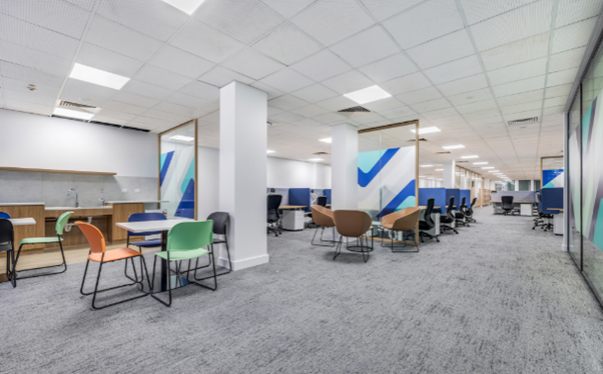
| Adelaide | Level 21, One Festival Tower, Station Road, Adelaide SA | New accommodation fit out | $3,576,780 |
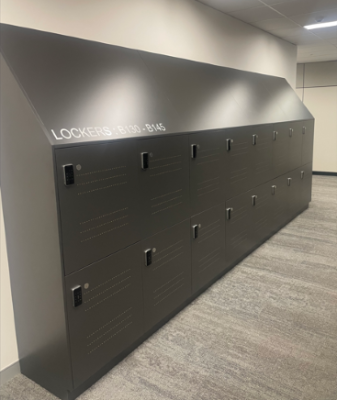
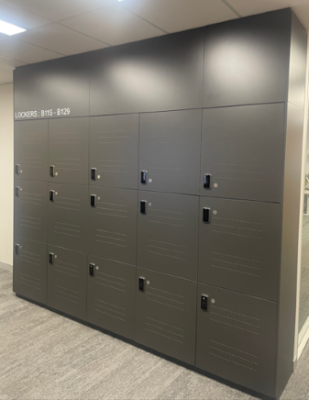
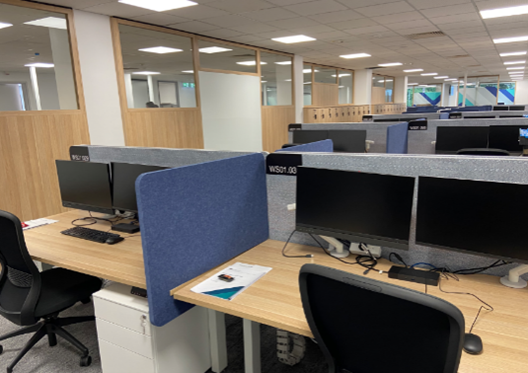
| Canberra | Enid Lyons Building, 71 Athllon Drive, Greenway ACT | Additional lockers to support desk sharing arrangements | $179,194 |
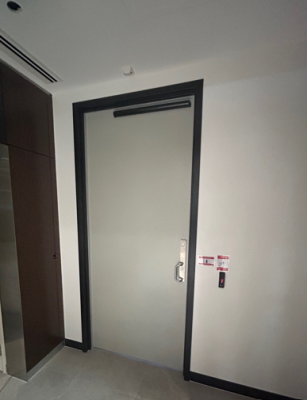
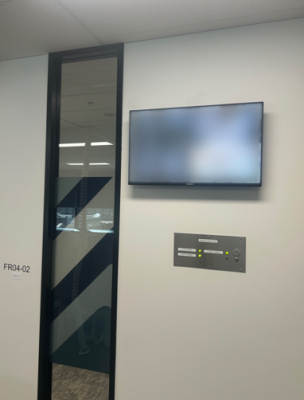
| Perth | 905 Hays Street, Perth WA | Establishment of security infrastructure at new site | $242,264 |
Note: The department has spent a total of $8,600 (GST inclusive) since January 2026 to 30 June 2026 on furniture maintenance.
New accommodation fit out on Level 21 Festival Tower Adelaide SA.
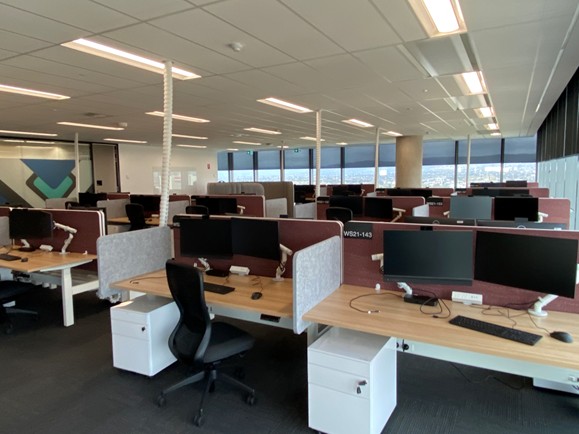
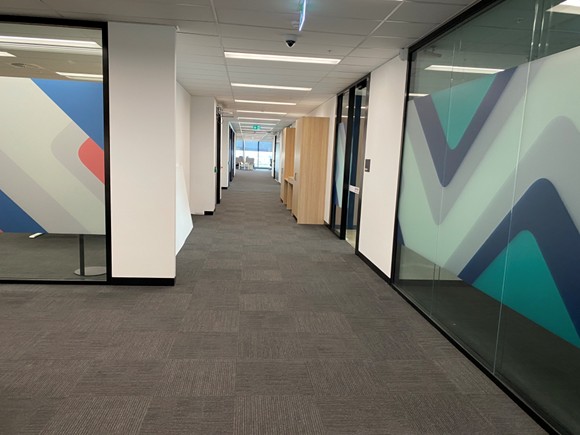
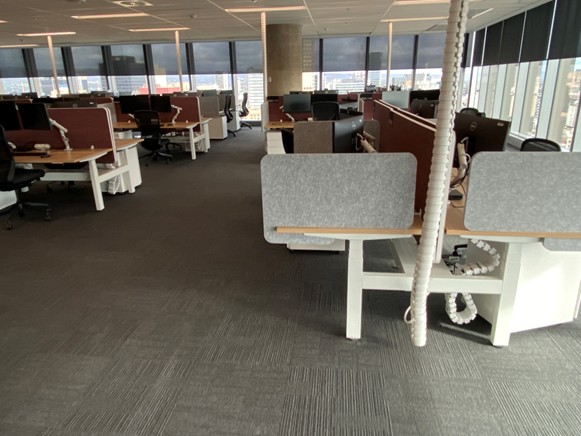
Additional lockers to support desk sharing arrangements - Enid Lyons Building, Greenway ACT.
Establishment of security infrastructure at new site - 905 Hays St, Perth WA.
The new accommodation fit out in Darwin was undertaken during 2024-25, with practical completion achieved on 9 January 2025. The department, however, was required to close the office from 3 April 2025 until 18 May 2026 due to work health and safety concerns.
Following the closure of the office, there have been upgrades to the air conditioning system to facilitate remediation work, including final invoices from the fit out project captured in 2025–26.
| Location | Address | Expenditure | Description | Cost (GST inclusive) |
|---|---|---|---|---|
| Darwin | Level 1, 43 The Mall, Darwin NT | Capital | Accommodation fit out in 2024–25 | $2,948,126 |
| Darwin | Level 1, 43 The Mall, Darwin NT | Capital | Accommodation fit out in 2025–26 | $18,686 |
| Darwin | Level 1, 43 The Mall, Darwin NT | Operating | Remediation work 2025–26 | $135,544 |
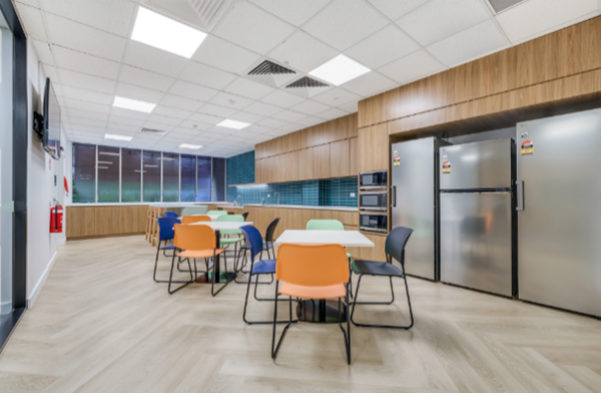
New accommodation fit out - Level 1 43 The Mall Darwin NT.
Our people
We continue to invest in our people’s capability. We also grow the diversity of our workforce to support the government to deliver outcomes for all Australians.
We report on our employee data biannually, based on data as at the end of June and end of December. This is via the APS Employment Database(Opens in a new tab/window) (APSED).
We operate in line with the Strategic Commissioning Framework. We do core work in-house in most cases. Any outsourcing of core work is minimal and aligns with the circumstances allowed under the Strategic Commissioning Framework. We continue to work to meet the principle to have 10% or fewer of our workforce outsourced.
Learn more about our organisational structure, including SES.
As at 30 June 2026, our workforce comprised of:
- 2,475 APS staff
- 283 contractors.
Of the 2,475 APS staff:
- 2,422 are ongoing
- 53 are non-ongoing.
We have 163 APS staff who identify as a person with disability (6.6% against the APS average of 5.9%*).
We have 117 APS Aboriginal and Torres Strait Islander staff (4.7 % compared to the APS average of 3.5 %*).
* APS Employment Data 31 December 2025, published 26 March 2026.
The table below shows the Average Staffing Level (ASL), Full Time Employees (FTE) headcount and contractors as at 30 June 2026.
| 30-Jun-25 | 30-Jun-26 | |
|---|---|---|
| ASL budget | 2,917.8 | 2,538.9 |
| ASL actual | 3,340.0 | 2,625.4 |
| FTE | 3,325.3 | 2,404.3 |
| Headcount | 3,566 | 2,475 |
| Contractors | 259 | 283 |
| Contractor % | 6.8% | 10.3% |
ASL budget is reported in the Portfolio Budget Statements 2025-26 (pre-Machinery of Government changes)
The table below shows the staff headcount and diversity numbers by classification as at 30 June 2026.
| Classification* | Actual** | Indigenous | Disability | CALD*** |
|---|---|---|---|---|
| SES 1-3 | 69 | 5 | 6 | 6 |
| EL1-2 | 946 | 28 | 45 | 60 |
| APS1-6 | 1,421 | 84 | 107 | 78 |
| Graduates and trainees | 39 | 0 | 5 | 1 |
| Total | 2,475 | 117 | 163 | 145 |
* APS employees only.
** This includes staff in their acting role and the substantive who are on leave.
*** We currently use Non-English-Speaking Background (NESB) data from the human resources (HR) system to determine Culturally and Linguistically Diverse (CALD) status.
Recruitment
Merit selection processes take an average of 14 weeks to complete the advertising, shortlisting, interviewing and onboarding processes.
During the period 1 July 2025 to 30 June 2026, we advertised a total of 19 vacancies, both ongoing and non-ongoing roles.
During the period 1 July 2025 to 30 June 2026, we engaged 105 ongoing employees and 27 non-ongoing employees (total 132).
The table below shows the number of ongoing and non-ongoing staff working full time or part time.
| Ongoing | Non-ongoing | ||
|---|---|---|---|
| Engaged full time | 90 | Engaged full time | 19 |
| Engaged part time | 7 | Engaged part time | 3 |
| Total | 97 | Total | 22 |
Of the 105 ongoing staff, 58 transferred to us from other APS agencies.
There were 55 employees transferred at the same classification, and 3 employees commenced on promotion.
Flexible work arrangements as of 30 June 2026:
- 1,469 of our people have approved working away from the office arrangements, accounting for 61.7% of the workforce (ongoing and non-ongoing employees)
- 341 of our people worked on a part time employment arrangement
- 213 also accessed working away from the office arrangements
- 276 of our people accessed compressed hours
- 186 also accessed working away from office arrangements
- 520 of our people worked a pattern of hours outside of the standard hours
- 342 also accessed working away from the office arrangements
- 809 staff within the ACT had a working away from the office arrangement in place, accounting for 55.8% of all ACT staff (excluding non-APS contractors).
The table below shows a breakdown of employees working from home per fortnight.
| Number of days per fortnight | Number of employees | Percentage of workforce |
|---|---|---|
| One day a fortnight | 2 | 0.1% |
| 2 days a fortnight | 91 | 3.8% |
| 3 days a fortnight | 18 | 0.8% |
| 4 days a fortnight | 329 | 13.8% |
| 5 days a fortnight | 58 | 2.4% |
| 6 days a fortnight | 385 | 16.2% |
| 7 days a fortnight | 64 | 2.7% |
| 8 days a fortnight | 445 | 18.7% |
| 9 days a fortnight | 19 | 0.8% |
| 10 days a fortnight | 58 | 2.4% |
A total of 971 staff (excluding non-APS contractors) work 6 or more days per fortnight at home. The table below shows the APS classification for these staff.
| APS classification | Total number |
|---|---|
| APS3 | 1 |
| APS4 | 53 |
| APS5 | 290 |
| APS6 | 312 |
| EL1 | 244 |
| EL2 | 71 |
| Grand Total | 971 |
Work health and safety
We are committed to proactively managing physical and psychosocial risk.
We conduct regular consultation, audits and monitoring of safety compliance and performance. This ensures we continue to improve our safety risk management arrangements. We aim to create and sustain safe, supportive, and inclusive work environments for all workers and visitors.
From 1 July 2025 to 30 June 2026, 3 incidents were notified to Comcare.
Freedom of Information requests
We are subject to the Freedom of Information Act 1982(Opens in a new tab/window) (Cth), including the requirement to publish information as part of the Information Publication Scheme (IPS).
Further detail about the information released in response to an FOI request is available on our Freedom of Information Disclosure Log.
Advertising
Our total expenditure on government approved information and advertising campaigns from 1 July 2025 to 30 June 2026 our total expenditure was $4,369,648 (GST exclusive), as itemised in the table below.
| Campaign | Purpose | Expenditure 1 July 2025 – 30 June 2026 |
|---|---|---|
| Consent Can’t Wait | Reduce the incidence of sexual violence in Australia by improving community understanding and attitudes on consent and healthy sexual relationships. | $3,849,636 |
| Hanging out to help out | Increase awareness, interest and consideration of volunteering opportunities among young people 15 to 18 years old. | -$14,980 |
| Stop it at the Start | Increase awareness amongst adults of the new and negative influences impacting young people and their behaviours towards disrespect and violence against women. | $534,992 |
| TOTAL | $4,369,648 |
Promotional merchandise
From 1 July 2025 to 30 June 2026, we spent $17,536.55 (GST exclusive) on promotional merchandise on behalf of the National Commission for Aboriginal and Torres Strait Islander Children and Young People.
Procurement activities
We procure goods and services, including consultancies, according to the Public Governance Performance and Accountability Act 2013(Opens in a new tab/window) (Cth) and the requirements of the Commonwealth Procurement Rules.
Between 1 July 2025 and 30 June 2026, we entered into 235 contracts with a total value of $6.4 billion (GST inclusive). In accordance with the Commonwealth Procurement Rules, we publish all procurement contracts with a value greater than $10,000 (GST inclusive) on the AusTender website(Opens in a new tab/window).
Further, between 1 July 2025 and 30 June 2026, we awarded 64 contracts to Indigenous businesses with a total value of $205.9 million (GST inclusive).
Market Research
Between 1 July 2025 and 30 June 2026, we entered into 3 market research contracts with a total value of $2,228,185.10.
Use of consultants
Between 1 July 2025 and 30 June 2026, we entered into 25 new consultancy contracts with total value of $6.0 million (GST inclusive).
We engage consultants:
- when there is a need for independent research and assessment
- when there is a need for specialised or professional skills
- where there are skills currently unavailable within the department.
Following the Commonwealth Procurement Rules, details about our consultancy contracts with a contract value of $10,000 (GST inclusive) and above are reported on the AusTender website(Opens in a new tab/window).
Paper usage
Our paper usage and its cost for the last 5 financial years:
| 2021–2022 | 2022–2023 | 2023–2024 | 2024–2025 | 2025–2026 | |
|---|---|---|---|---|---|
| Australian made spend | $28,610.45 | $26,415.31 | $348.46 | $0 | $0 |
| Overseas spend | $533.85 | $9,482.98 | $40,996.26 | $32,626.13 | $16,441.97 |
| Total spend | $29,144.30 | $35,898.29 | $41,344.72 | $32,626.13 | $16,441.97 |
| 2021–2022 | 2022–2023 | 2023–2024 | 2024–2025 | 2025–2026 | |
|---|---|---|---|---|---|
| Australian made reams | 4,989 | 4,511 | 34 | 0 | 0 |
| Overseas reams | 32 | 1,557 | 6,301 | 4,940 | 2,404.5 |
| Total reams | 5,021 | 6,068 | 6,335 | 4,940 | 2,404.5 |