
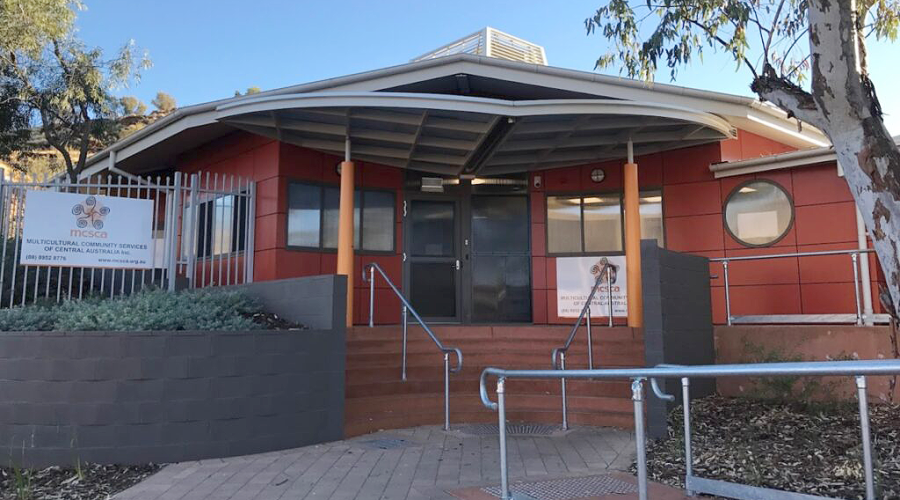
For more than 35 years, Multicultural Community Services of Central Australia (MCSCA) has helped migrants build new lives in Central Australia. What started as a volunteer program has grown into the region’s primary organisation dedicated to supporting migrant communities.
Now MCSCA helps people from Alice Springs to Tennant Creek through some of life's toughest moments.
‘We provide services for anyone who was born overseas or has had a parent overseas,’ Apajok, the manager of MCSCA, explained.
‘We are a free drop-in centre,’ Settlement Case Worker, Liz, added. ‘We won’t say no to anyone.’
MCSCA helps people settle into a new country. It also supports people facing money problems, family breakdown or an unexpected crisis. Many are alone, far from family and their support networks.
With Emergency Relief funding from us, MCSCA provides practical help to the people who walk through their doors. This can range from securing emergency accommodation and food vouchers to help accessing important documents and services.
People can also connect with others and get practical help to move forward. Settlement Case Worker Jessye said their clients often may not have the support of family and friends they had back home.
‘Alongside the Emergency Relief, we provide practical support, so they don't feel alone,’ Jessye said.
One woman in need of relief came to MCSCA after leaving a domestic violence situation.
She was raising her young son on a single income and struggling to keep up with rent. Unsure where to turn, she was referred to MCSCA for support.
‘We used Emergency Relief funds to help pay two weeks of her rent, provided food vouchers and continued wraparound support with different organisations to help keep her and her son safe,’ Liz explained.
MCSCA’s help did not stop once the immediate crisis had passed. The young mother could keep coming to MCSCA for support. This helped her stay connected to services as she rebuilt her life.
As the only organisation of its kind in Central Australia, MCSCA provides a place for people to turn when times become tough.
‘To be able to do this is crucial to support this community to thrive,’ Apajok said.
Was this page helpful?
DSS5352 | Permalink: www.dss.gov.au/node/5352