|
Welcome to our newsletter for October 2026
We are now in our fifth edition of Community Sector News and we want to hear from you!
Whether you’re enjoying the content, think there could be some improvements or simply want to share your thoughts, we invite you to fill out our short readership survey.
All feedback is valuable to help us improve future editions of Community Sector News. |
|
|
|
|
|
The Australian Government is strengthening protections for victim‑survivors of financial abuse through reforms across superannuation, tax, corporate accountability and child support.
Financial abuse is a serious form of domestic and family violence that can leave victim‑survivors facing long‑term financial hardship, debt and reduced economic security.
On 14 October, the government:
- tabled its response to the Parliamentary Joint Committee on Corporations and Financial Services inquiry into financial abuse, supporting, or supporting in principle, 58 of its 61 recommendations
- released a consultation paper on reforms to take action against fraud and financial abuse.
The consultation will consider options to provide:
- targeted relief and better respond where coercion, fraud or other abusive conduct has caused significant financial harm
- courts with greater flexibility to transfer a tax or social security debt to the spouse responsible for financial abuse in family law proceedings.
Submissions are open until 27 November 2026.
To make a submission, visit the Treasury website. |
|
|
|
|
- the evidence on violence against LGBTIQA+ people
- the drivers of this violence, including those shared with violence against women
- actions for governments, services and organisations
- principles for working respectfully with LGBTIQA+ communities.
Whether you work in family, domestic and sexual violence, health services, LGBTIQA+ health or any sector that shapes safer communities, we encourage you to use this framework. It can help you to understand and take action to prevent gender-based violence against LGBTIQA+ people and communities.
Lasting change requires coordinated action across systems, sector and communities. Together, we can build a future where children, families and communities are safe, supported and free from violence.
Read the new national framework. |
|
|
|
|
|
The Australian Government is investing $3.5 million in 12 projects to help prevent and respond to technology-facilitated abuse of women and children.
The initiatives are funded through Round 3 of the Preventing Tech Based Abuse of Women Grants Program and will:
- address a range of online harms, including digital financial abuse, impersonation and image-based abuse
- provide women and girls with the knowledge and skills to recognise, prevent and respond to technology-facilitated abuse
- focus on supporting Aboriginal and Torres Strait Islander women and girls, people with disability, women from multicultural backgrounds and older Australians.
This includes $1 million for 4 projects that aim to promote positive online experiences for boys and young men and encourage respectful attitudes and behaviours online.
This latest investment builds on $6.5 million already committed to 16 projects since 2023 and supports the National Plan to End Violence Against Women and Children 2022-2032.
The funded organisations will deliver community-led and culturally responsive approaches to addressing emerging forms of online abuse, helping to create safer digital environments for women, children and communities across Australia.
Visit the eSafety Commissioner website for more information. |
|
|
|
|
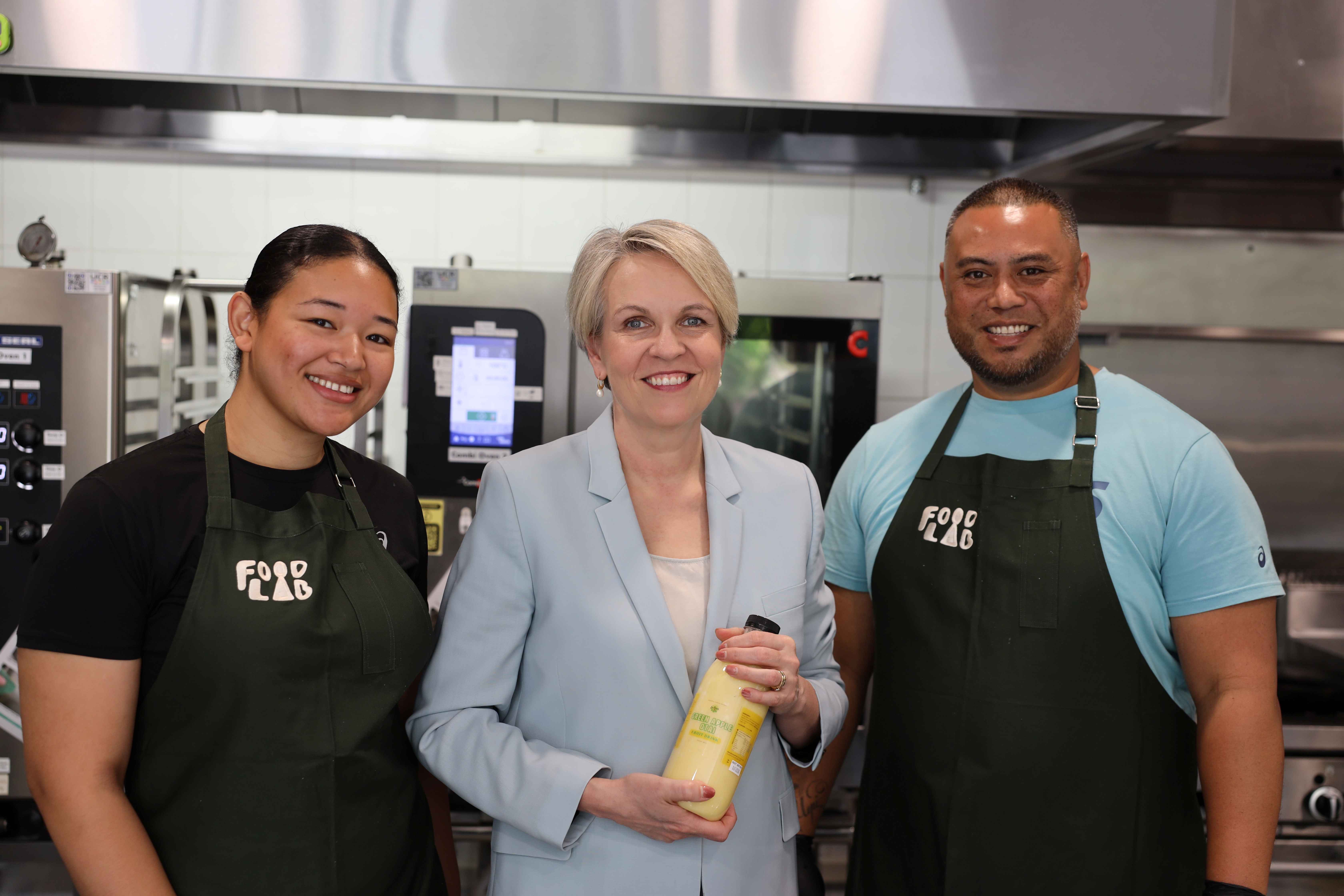 |
| Tai (left) and Daniel Uepi (right) who run Lu Run, an authentic Tongan and Pacific Island food truck, share their traditional Tongan drink Otai with Minister Plibersek |
Six more social enterprises dedicated to strengthening their communities will receive a capability building grant through the latest Social Enterprise Development Initiative (SEDI) round. The funding will build their capability to grow their businesses and create positive change in their communities.
On 1 October 2026, Minister for Social Services, Tanya Plibersek, announced the 6 social enterprises that will benefit from a total of $600,000 in grants:
- Future Anything - helping young people build employability skills by creating and leading their own social enterprises.
- Strait Experience - creating local jobs for Torres Strait Islander people through cultural, arts and history tourism experiences.
- RoboFit - combining rehabilitation and employment opportunities for Australians living with disability.
- Food Lab - training people from refugee, migrant, First Nations and low-income backgrounds to start food businesses and build careers.
- Prepare Produce Provide - supporting Indigenous youth in Western Australia with training and hands-on experience to create pathways into education, food and hospitality.
- HoMie - funding employment training and support for young people experiencing homelessness or hardship through its streetwear business.
Since 2024, SEDI has awarded over 60 social enterprises grants worth $6.6 million.
The impact of these grants is highlighted in a series of videos showing how they are creating jobs, building skills, strengthening communities and helping more Australians achieve long-term economic and social wellbeing.
Watch how previous SEDI grant recipient, SisterWorks, was supported to create employment pathways for migrant, refugee and asylum seeker women here.
|
|
|
|
|
|
The Australian Government is investing an additional nearly $10 million a year to help more Australians experiencing the financial impacts of gambling harm get the support they need.
This investment will double the reach of financial counselling for gambling services, helping up to 10,000 people each year.
Gambling harm affects more than the person gambling. Financial losses can place enormous pressure on families, relationships and household budgets, impacting partners, children, parents and loved ones.
Specialist gambling financial counsellors help people get back on track financially, manage debt, and rebuild confidence and control over their finances.
The funding will support:
- greater access to free and confidential financial counselling, including help to manage debt and access hardship arrangements
- more specialist financial counsellors through expanded training and workforce development
- increased support in regional and remote communities through Financial Wellbeing Hubs
- more financial literacy education, workshops and community information sessions to raise awareness of online gambling harm and "scambling" scams disguised as gambling
- expanded services in areas of high need, including tailored support for specific communities and cohorts.
This funding comes as communities across Australia mark Gambling Harm Awareness Week in New South Wales and the Australian Capital Territory, raising awareness of the impacts gambling harm can have on individuals, families and communities, and encouraging people to seek support when they need it.
For more information about available services, visit the Department of Social Services website. |
|
|
|
|
|
On Thursday 15 October 2026, the Australian Government introduced a new Digital Duty of Care law, designed to improve online safety and hold online service providers more accountable for preventing harm on their platforms.
The new Digital Duty of Care will set minimum safety standards for online services and ensuring they are doing everything possible to protect Australians from seriously harmful material, conduct, features and tools.
This also includes the 'My Feed, My Way' initiative which will give users control over their social media algorithms. ‘My Feed, My Way’ allows users the option to choose what appears in their social media feed, ultimately giving them more control over what they see.
The Digital Duty of Care will also protect under 18s from harmful content online. This includes content that:
- glorifies crime or dangerous stunts
- causes serious mental distress
- encourages eating disorders
- promotes negative or hostile attitudes towards women.
The Digital Duty of Care will require online service providers to take greater responsibility for the safety of their platforms. They will need to regularly identify risks, take steps to reduce harm and be transparent about how they are making their platforms safer for Australians.
Have your say! Consultation on the Digital Duty of Care law is now open. Submissions close 11:59pm AEDT on 5 November 2026. |
|
|
|
|
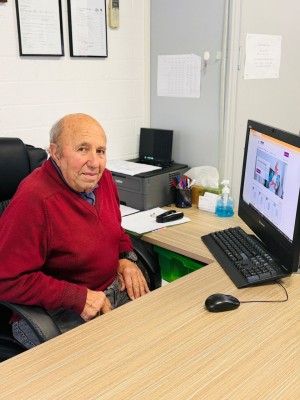 |
| 81-year-old Giuseppe at his online learning session |
The Be Connected program has reached a major milestone, delivering over 3 million learning sessions and helping Australians increase their digital confidence. The achievement reflects the dedication of community organisations helping people gain new skills online since the program began in 2017.
Be Connected helps people aged 50 and over feel more confident and ready to tackle the online world. It provides free resources like online learning modules and in-person computer classes delivered through community organisations.
One of those learning sessions helped 81-year-old Giuseppe, who sought help understanding a healthcare text message. With support from volunteers at Sufi Festival Australia in Victoria, he learned how to access the information and gained confidence using digital technology.
Be Connected is supporting Get Online Week from 19–25 October this year, with free events taking place across Australia, helping people build digital skills and confidence. There are many to choose from, such as the Older Women’s Network, who are hosting a fun, interactive game show event titled ‘Spot the Scam Before It Gets You!’.
You can find an event near you using the Event Finder.
Be Connected is delivered in partnership with the Department of Social Services, eSafety Commissioner and Good Things Australia. |
|
|
|
|
|
The Australian Government is investing $630 million to deliver fairer pay to more than 460,000 health, disability and community services workers.
The 13 October announcement follows the Fair Work Commission’s Gender-based undervaluation – priority awards review, which found that work in these industries has been undervalued because of gender-based assumptions.
Changes to the Social, Community, Home Care and Disability Services (SCHADS) Award include:
- new definitions in the award
- changes to rules about progression between pay points
- a new classification structure
- changes to minimum pay rates.
An initial increase of up to 15% in minimum award rates for home care employees performing disability care will apply from 1 December 2026. Most other changes will apply from 1 October 2027.
Other changes include increases to minimum pay rates for eligible health professionals under the Health Professionals and Support Services (HPSS) Award, commencing from the first full pay period starting on or after 1 October 2026.
The $630 million investment will support social and community sector organisations that deliver government programs to implement award-related wage changes while maintaining the continuity and quality of services for Australians.
More than 128,000 services funded under 92 programs will receive additional funding.
Next steps and more information
Affected organisations will be contacted with information about funding amounts, timing and any required updates to grant agreements. Providers do not need to apply separately unless advised otherwise.
Visit the Fair Work Ombudsman website for more information about changes to the SCHADS Award.
Read the Fact Sheet for Providers to understand more about the change. |
|
|
|
|
Each year, October is recognised as Mental Health Month – a time to raise awareness, reduce stigma and promote community wellbeing.
The Australian Institute of Family Studies (AIFS) has developed guidance for community-based services supporting young people.
Early intervention for young people’s mental health: Guidance for community-based services is a resource that assists with understanding early intervention in a community-based mental health environment. It covers the:
- difference between mental health and mental illness
- definitions of the main provision levels of early intervention - promotion, prevention, early identification and case management
- challenges to providing early intervention supports.
The practice guide has been developed for practitioners who:
You can also register for a free AIFS webinar from 9 to 30 October 2026 which explores how we can listen to and embrace children’s experiences when working with Aboriginal and Torres Strait Islander families.
Learn more about the framework and how to use it on the AIFS website.
|
|
|
|
|
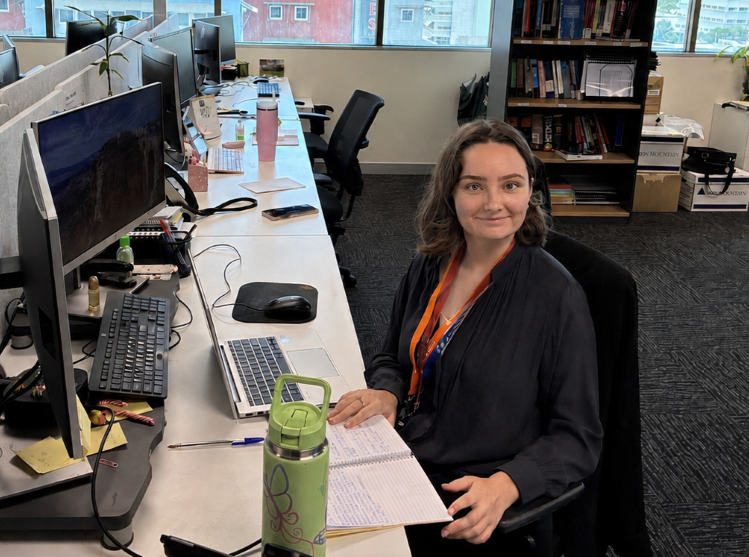 |
| Kaitlyn from YouthWorX NT, sitting at her desk in the office. |
Helping a young person find meaningful work is not only about preparing them for employment. It can also mean helping employers feel confident about creating an inclusive workplace. YouthWorX NT works on both sides of that equation.
Through Inclusive Employment Australia, the organisation supports young people to build their confidence, skills and workplace experience, while also helping employers better understand disability and inclusion.
For Kristy-Ann Obst, Team Leader for the Inclusive Employment Program, creating a safe and supportive environment gives young people the opportunity to grow in confidence and explore what they can achieve.
‘I would love every young person to have that feeling of safety and belonging and to get that confidence they need to thrive in the world,’ Kristy-Ann said.
Kaitlyn's experience shows what that support can look like. After taking part in coaching and workshops with YouthWorX NT, Kaitlyn completed a one-week work experience placement with the Northern Territory Department of Children and Families. The experience led to her first job offer, a 12-month part-time traineeship.
But YouthWorX NT's role does not stop when a young person enters the workplace. The team also works with employers to build understanding, address questions and create more inclusive workplaces. They continue supporting both the young person and employer as they navigate the transition into employment.
For Kristy-Ann, that employer engagement is also an opportunity to challenge misconceptions about employing people with disability and help open doors for others.
‘People with disability are often overlooked because of the stigma that employing them will be difficult or expensive for an employer to facilitate that person being there, and that’s truly not the case,’ she said.
‘We want to break down that stigma and create awareness.'
Read how YouthWorX NT is supporting young people and employers to create pathways into meaningful employment. |
|
|
|
|
|