|
|
Welcome to our newsletter for September 2026
We are now in our fourth edition of Community Sector News and we want to hear from you!
Whether you’re enjoying the content, think there could be some improvements or simply want to share your thoughts, we invite you to fill out our short readership survey.
All feedback is valuable to help us improve future editions of Community Sector News.
|
|
|
|
|
|
|
The Domestic, Family and Sexual Violence Commission has released its third Yearly Report to Parliament. The report outlines 8 recommendations to accelerate progress towards the goals of the National Plan to End Violence against Women and Children 2022–2032 (the National Plan).
The report acknowledges the progress governments, services and communities have made to address domestic, family and sexual violence, while highlighting areas where further action is needed to achieve the National Plan's long-term goals. This includes family law, sexual violence, accountability, evidence, and checking whether funding is improving outcomes.
Recently, National Cabinet agreed on a new National Risk Assessment Framework to ensure responses to violence remain consistent across borders. The framework aims to ensure that when a person at risk seeks help, whether through a GP, police officer, nurse or social worker, signs of risk are identified and acted on.
The Government has also reformed the family courts, child support, tax, superannuation and social security; alongside permanent Leaving Violence Payments, investments in crisis accommodation and housing, and boosted funding for frontline workers.
The report includes 8 recommendations for the National Plan based on monitoring and reporting, evidence reviews and consultation on the Second Action Plan. The recommendations focus on:
- making sure all parts of government manage domestic, family and sexual violence risks in policy, funding and service delivery
- co-designing policies and services with people who face the greatest barriers to safety
- investing more in early support to help prevent violence
- making safety, healing and recovery key parts of support systems
- creating a National Evidence Collaboration to bring together research, evaluation, data and national evidence priorities
- improving monitoring, accountability and ongoing learning across the National Plan
- building on justice and family law reforms to improve safety, accountability and recovery
- making sure sexual violence is treated as a clear priority and has the right resources.
Progress on the Second Action Plan under the National Plan, and the associated action plans for Safe and Supported, Our Ways – Strong Ways – Our Voices and the National Strategy to Prevent and Respond to Child Sexual Abuse continue through targeted validation activities.
You can read the 2026 Yearly Report on the Domestic, Family and Sexual Violence Commission website and the Minister's speech in Parliament.
|
|
|
|
|
|
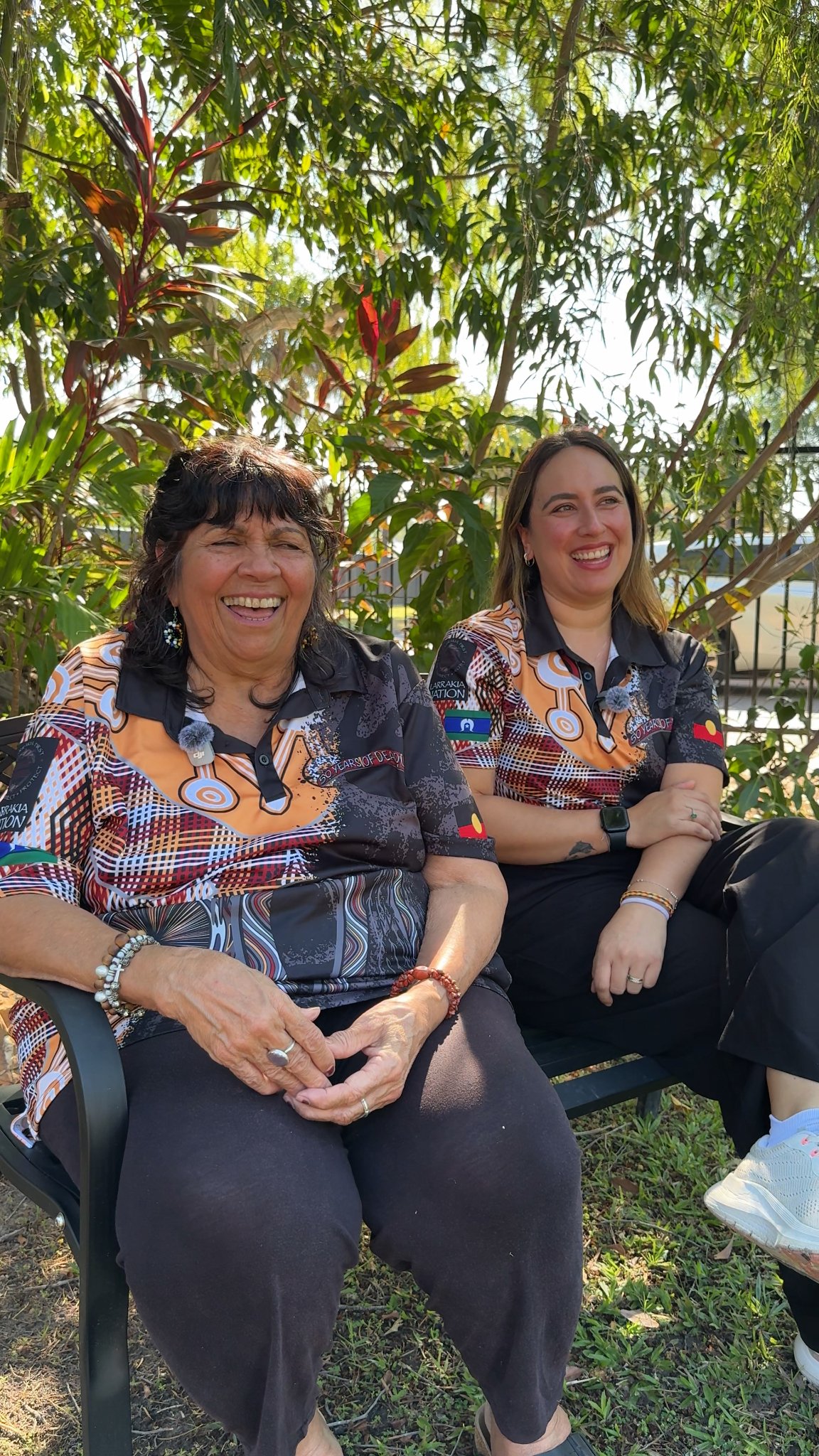 |
| DAIWS General Manager, Regina Bennett, with domestic, family and sexual violence support worker, Ana Márquez. |
For 40 years, the Darwin Aboriginal and Torres Strait Islander Women's Shelter Indigenous Corporation (DAIWS) has been supporting Aboriginal and Torres Strait Islander women and children experiencing family, domestic and sexual violence. Established in 1986, the organisation has grown from a single site into a comprehensive service delivering crisis accommodation, transitional housing units, outreach programs, specialist family violence support which includes domestic violence counselling for women and children's play therapy programs.
Today, DAIWS employs 41 staff across multiple locations and continues to provide culturally safe, trauma-informed support to women and families throughout Darwin and the surrounding region.
With support through our Increasing Capacity of Crisis Accommodation Services for Aboriginal and Torres Strait Islander Peoples Program, DAIWS also operates a specialist domestic, family and sexual violence support service in Darwin hospitals. Since commencing in March 2025, the service has supported 374 women and connected around 170 women with specialist outreach, accommodation and legal services.
The service engages women at a critical point, immediately after experiencing violence, connecting them with emotional support, safety planning and specialist referrals.
General Manager Regina Bennett says the hospital-based service is making a tangible difference. ‘Before the project went into the hospital, women would come through emergency and leave unassisted,’ Regina said.
‘Now we're capturing them and referring them to services. I would say it saves women.’
The hospital-based service model has also inspired similar programs throughout the Territory. Emergency departments in Alice Springs, Tennant Creek and Katherine have reached out to DAIWS for advice and guidance on establishing their own programs.
‘There are nurses who have transferred [to Darwin hospitals] from Alice Springs who have asked me about this program and said, “this would be so helpful, we see so many women that would benefit from it”,’ says domestic, family and sexual violence support worker Ana Márquez.
‘When I see women at the hospital and introduce myself, you can see the relief. You can see they know they’re going to be taken care of, helped, and that’s everything that they need at that point in their life.’
‘It would definitely be a good extension to the program and money well spent to help more women in remote areas.’
For DAIWS, every woman who finds safety, support and a pathway forward is a reminder of the impact that dedicated, community-led services can achieve.
You can read more about the DAIWS support for NT women on our website.
|
|
|
|
|
|
|
Through our new national Place Partnership Model, we’re working alongside 18 communities across Australia to back local leadership, strengthen community connections and deliver better outcomes for children and families.
Through Partnership Tables, communities, service providers and governments are coming together to identify local priorities and drive coordinated action that responds to local needs and aspirations.
We know communities understand their own strengths and challenges better than anyone. The Place Partnership Model is a new way of working together, making sure support is practical, connected and tailored to what each community needs most. It gives communities a stronger voice in decisions, supports local leadership, and helps governments work together more effectively to back community-led solutions.
Partnership Tables have now been held in 17 of the 18 communities, bringing together local leaders, community backbone organisations and service providers. These conversations have been invaluable in helping us hear directly from communities about their priorities, strengths and plans for the future.
They have also provided an opportunity for service providers to explore how the new Children and Family Support program can best respond to local needs and align with community priorities. The Tables have also supported discussions about opportunities for local Aboriginal Community-Controlled Organisations to expand their role and deliver more services where they are ready and able to do so.
By listening to communities and investing in what matters most to them, we’re building stronger connections, better coordinating support, and creating better opportunities for children and families.
You can read more about how we’re strengthening the way communities and government work together on our website.
|
|
|
|
|
|
|
Three years after its launch, Australia’s National Self-Exclusion Register BetStop continues to help reduce online gambling harm.
The service allows people to choose to block themselves from all licensed online and telephone betting services. While registered, they cannot access betting accounts or receive direct gambling advertising.
As of July this year, more than 67,000 Australians had registered with the service, with 38% choosing a lifetime exclusion.
An independent review found BetStop is delivering meaningful benefits for people affected by online gambling. It also identified opportunities to strengthen awareness, user experience and access to support. In response, the Australian Communications and Media Authority has established a taskforce to help strengthen BetStop and work with community organisations, service providers and other stakeholders.
Strengthening BetStop is part of the Australian Government’s new gambling reforms, which aim to protect more people from the harms caused by online gambling and improve access to support for individuals, families and communities. The reforms also include expanding financial counselling support for gambling and work to increase public awareness of online gambling harms.
These measures will help community organisations better support people experiencing gambling-related harm and connect them with appropriate services earlier.
If you are interested in engaging with the BetStop Taskforce or contributing to future improvements, email BetStopTaskforce@acma.gov.au.
|
|
|
|
|
|
|
Get Online Week is back next month, running from 19 to 25 October 2026. Community organisations across Australia will be hosting free events and activities to help older Australians build their digital skills and confidence.
Supported by the Be Connected Program, Get Online Week helps raise awareness of digital inclusion, the benefits of getting online and the free support available to help people improve their digital skills. Whether you run a community centre, library, seniors group or neighbourhood house, you can help people in your community develop the skills they need to stay connected, access services and participate online.
We’re proud to support Get Online Week through through the Be Connected program. This year, over 500 community organisations will receive $1,000 grants to host free Get Online Week events in their local communities.
To learn more about the free learning resources and support your organisation can provide visit the Be Connected website.
|
|
|
|
|
|
|
People in the new Robodebt class action appeal settlement will receive their full compensation payments.
Under normal circumstances, lump sum compensation payments like these can be subject to taxation, income testing and Commonwealth statutory recovery schemes.
Legislative and regulatory changes will exempt the new Robodebt class action payments from these arrangements.
The changes will also ensure the settlement payments are not treated as income for class action members currently getting an income support payment from Services Australia.
Legislative amendments relating to social security, veterans’ payments and the National Disability Insurance Scheme will progress as a matter of priority to make sure there are no delays to eligible group members getting their payments. Other exemptions will follow, including an exemption from income tax, before the end of the 2026-27 financial year.
More information on the exemptions to new Robodebt class action appeal settlement payments is available in the Minister’s media release.
|
|
|
|
|
|
|
Targeted consultation has commenced on draft legislation for the Digital Duty of Care, with the new laws requiring digital service providers to provide a safe online environment, setting minimum standards for the features and tools they use.
This will include an Australian first, 'My Feed, My Way', initiative which will give users control over their social media algorithms.
Social media platforms will be required to send a notification to new and existing users offering them a choice over their default feed. Users can choose to opt in to having their default feed include personalised content recommended by the algorithm, or choose to see the friends and creators they follow.
Digital services like online games, apps and AI chatbots will be required to protect under 18s from design features that have negative behavioural impacts, like addictive features or those that can have an effect on a young person’s self-esteem. Services will also be required to protect under 18s from harmful content.
The Government is seeking feedback from digital platforms, industry bodies, civil society organisations and advocates on the draft laws, with legislation to be introduced to Parliament this year.
More information on the proposed legislation is available in the joint Prime Minister and Minister for Communications’ media release.
|
|
|
|
|
|
|
Last week was National Child Protection Week. But work to protect children continues every day.
One organisation helping keep children safe is Stronger Families. Funded by the department, Stronger Families delivers the Caring Dads program, which enables men to take responsibility for their actions – fostering healthier relationships and safer environments for their children.
Sometimes, the lever for a father to change starts with his children – something Noël Robertson and Cath Mansfield at Stronger Families see every time a new group of fathers start their 17-week Caring Dad program.
‘The program combines accountability with a trauma-informed and therapeutic approach,’ Noël said.
Caring Dads is dedicated to improving the safety and wellbeing of children, by working with fathers who have used violence, abuse or neglect. Through weekly group sessions, participants are supported to examine the impact of their behaviour on their children and take responsibility for change.
‘The program helps fathers see their behaviour through their children’s eyes.’
‘Safety must remain the priority, and any rebuilding must happen on the child’s timeline,’ Cath explained.
With over 60% of participants completing the course, and ongoing support and connected services offered afterwards, Caring Dads makes a significant and real impact in the lives of fathers, their families and communities.
Watch this video to hear one dad’s experience in the program.
For more information on National Child Protection Week, visit the NAPCAN website. You can also watch the NAPCAN launch event panel discussion with Minister for Social Services, the Hon Tanya Plibersek MP, alongside children’s advocates, young people, media and digital-safety leaders.
We’re proud to fund NAPCAN and support National Child Protection Week – helping every child grow up safe, connected and supported within their family, community and culture.
|
|
|
|
|
|
|
Community organisations, frontline workers and service providers play an important role in supporting survivors of child sexual abuse. If you have a client who is considering applying to the National Redress Scheme, there are a number of resources available to help.
With the Scheme application deadline of 30 June 2027 approaching, it is critical that community members are supported to make informed decisions about whether applying is right for them.
For many survivors, applying for redress is the first time they have spoken about their experience. A range of resources are available to support conversations with your clients to help them better understand the Scheme, including information on available supports and what the application process may involve. Resources include a discussion guide with information about managing and responding appropriately to a client disclosure of institutional child sexual abuse and a brochure explaining the application process. Specialist Redress Support Services are also available to help your clients understand the Scheme.
Some people find it helpful to hear the experiences of others who have applied for redress. We have case study videos available on our website that you can share with your clients to help them understand how the process works and what they can expect.
Information about the Scheme, available support services and how to apply is available on the website or by calling 1800 737 377, Monday to Friday 8am to 5pm.
|
|
|
|
|
|
 |
| Artist's impression of the National Memorial. |
The start of construction on the National Memorial for Victims and Survivors of Institutional Child Sexual Abuse was marked earlier this month in a sod turning ceremony in Canberra. The event recognised the strength and advocacy of victims and survivors, and reaffirmed our commitment to remembrance, healing and truth.
Minister for Social Services the Hon Tanya Plibersek MP, Assistant Minister for Social Services the Hon Ged Kearney MP, and Federal Member for Canberra Alicia Payne, joined the National Memorial Advisory Group, survivors and project partners for the event.
Advisory Group members, including people with lived experience and advocates, have played a vital role in shaping the memorial and continue to guide its development.
Delivered in partnership with the National Capital Authority, the memorial will feature a metal sculpture surrounded by stone formations and native plantings. The memorial will honour those who lost their lives and recognise the courage of those who fought for justice, and those whose voices were not heard. It will also provide a place for reflection, healing and connection.
The completed memorial is expected to open in 2027. You can view a rendering of the National Memorial design and construction updates on our website.
|
|
|
|
|
|